

Smart Upgrades, Strategic Improvements, and What Actually Pays Off in Today’s Market
If you’re planning to sell your home, one of the most important questions to answer is simple: what should you fix, update, or improve before listing?
Not every upgrade adds value. Some improvements deliver a strong return, while others cost more than they’re worth. The goal is not to make your home perfect. The goal is to make it market-ready, competitive, and appealing to buyers without overspending.
Below is a practical, market-driven guide to the improvements that actually move the needle when it comes to price, speed of sale, and buyer perception.
Start With the Big Picture: Condition and First Impressions
Before thinking about renovations, step back and evaluate your home the way a buyer would. What stands out in the first 30 seconds?
Buyers make fast emotional decisions. A clean, well-maintained home feels valuable. A neglected one raises concerns, even if the structure is solid.
That’s why the highest return often comes from simple improvements done well.
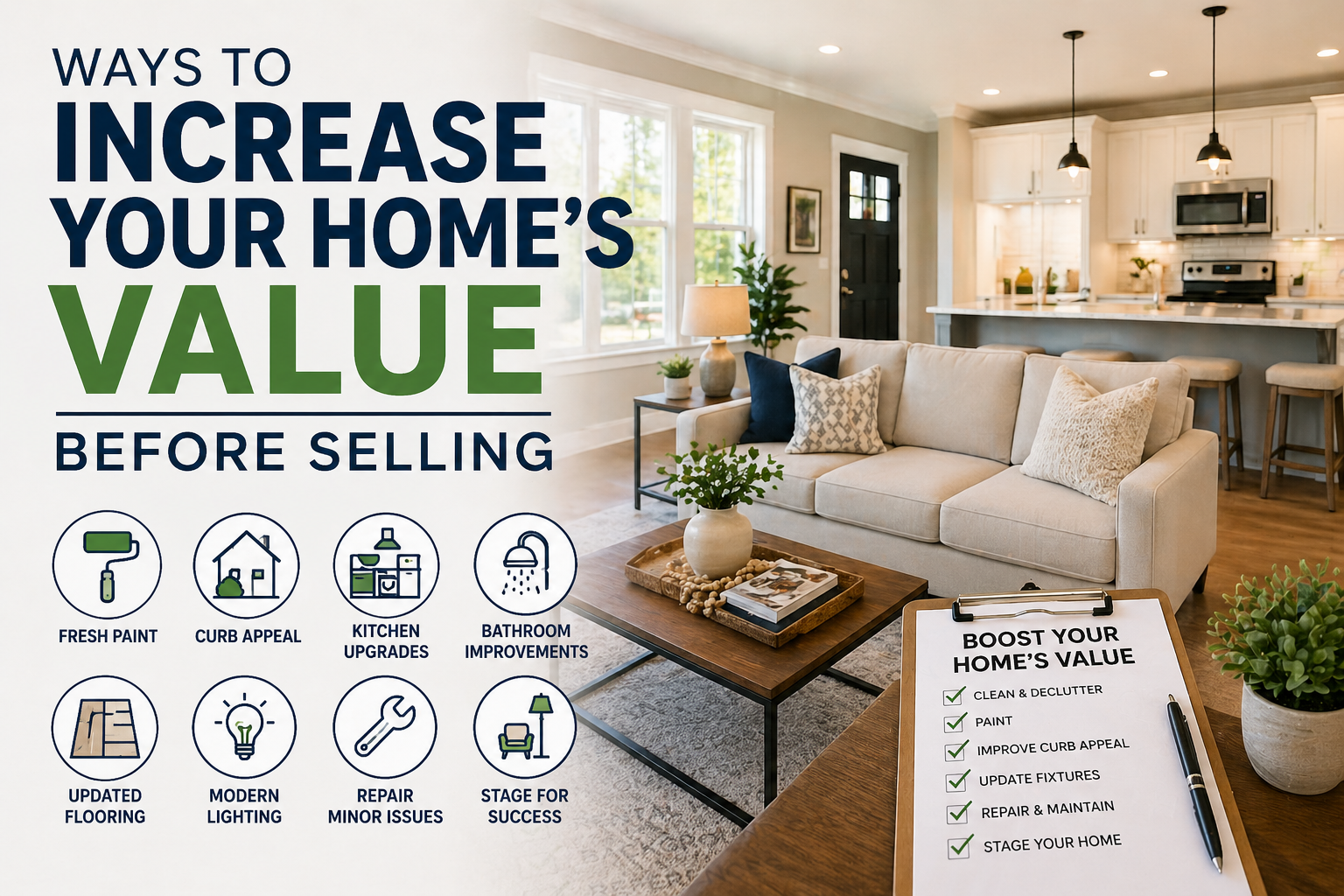
1. Deep Cleaning and Decluttering
This is the most underrated value driver. A professionally cleaned and decluttered home can feel significantly more expensive without any renovation at all.
- Remove excess furniture to make rooms feel larger
- Clear countertops and surfaces
- Organize closets and storage areas
- Clean windows, baseboards, and floors thoroughly
A clean home signals to buyers that the property has been well cared for.
2. Fresh Paint: High Impact, Low Cost
Few upgrades deliver a better return than paint. Neutral, modern colors make spaces feel brighter, larger, and move-in ready.
Focus on:
- Living areas and hallways
- Kitchen and bathrooms
- Any walls with bold or outdated colors
Stick to light neutrals such as warm whites, soft grays, or beige tones. This allows buyers to imagine their own style in the space.
3. Boost Curb Appeal
The exterior is your first showing. If buyers aren’t impressed from the outside, everything inside becomes harder to sell.
Simple improvements include:
- Fresh mulch and trimmed landscaping
- Power washing driveway, walkway, and exterior
- Painting or replacing the front door
- Updating house numbers and exterior lighting
Curb appeal doesn’t require a full redesign. It requires attention to detail.
4. Minor Kitchen Upgrades That Actually Pay Off
A full kitchen remodel is rarely necessary before selling. Instead, focus on targeted updates that improve appearance without major cost.
- Replace outdated cabinet hardware
- Update light fixtures
- Install a modern faucet
- Repaint or refinish cabinets if needed
If countertops are heavily worn, replacing them can make a strong visual difference, but only if it aligns with the overall price point of the home.
5. Bathroom Improvements That Matter
Bathrooms don’t need to be luxury spaces, but they do need to feel clean and updated.
- Replace old fixtures and mirrors
- Re-caulk tubs and showers
- Update lighting for a brighter feel
- Install a new vanity if the current one is outdated
Even small changes can shift a buyer’s perception from “needs work” to “move-in ready.”
6. Flooring: Repair or Replace Strategically
Flooring has a major impact on how a home feels. Worn carpets, scratched surfaces, or mismatched materials can reduce perceived value quickly.
Options depend on condition:
- Deep clean carpets if they’re in good shape
- Replace heavily worn carpet with neutral options
- Refinish hardwood floors if possible
- Ensure consistency between main living areas
Buyers prefer clean, cohesive flooring over a mix of outdated materials.
7. Lighting: One of the Easiest Value Boosts
Lighting affects mood, space perception, and overall appeal.
- Replace outdated fixtures with modern designs
- Use consistent color temperature bulbs throughout the home
- Add lighting to darker areas where possible
A well-lit home feels larger, cleaner, and more inviting.
8. Address Repairs Before Listing
Small issues can create large doubts in a buyer’s mind. A loose handle or leaky faucet may seem minor, but it signals potential neglect.
Take care of:
- Leaky faucets and running toilets
- Damaged drywall or paint
- Squeaky doors or loose hardware
- Minor electrical or plumbing issues
A home that feels “finished” performs better during inspections and negotiations.
9. Stage the Home for Maximum Appeal
Staging is not about decoration. It’s about positioning the home to highlight space, function, and lifestyle.
- Arrange furniture to create flow
- Define each room’s purpose clearly
- Add neutral décor and simple accents
Professionally staged homes often sell faster and for higher prices because they reduce buyer uncertainty.
10. Focus on What Buyers Actually Care About
Not all upgrades are equal. Some improvements rarely provide a strong return before selling:
- Luxury custom features that don’t match the neighborhood
- Highly personalized design choices
- Major renovations with long timelines
The goal is alignment with the market, not over-improvement.
Understanding Return on Investment
Every dollar you spend before selling should be evaluated through one lens: Will this help the home sell faster or at a higher price?
In most markets, the highest ROI comes from:
- Cleaning and presentation
- Paint and cosmetic updates
- Minor kitchen and bathroom improvements
- Curb appeal enhancements
Major renovations can make sense in specific cases, but they require careful analysis based on comparable sales.
Timing Matters as Much as Improvements
Even a perfectly prepared home needs the right pricing and timing strategy.
Market conditions, inventory levels, and buyer demand all influence how much value you can extract. That’s why preparation and pricing should work together, not separately.
Final Thoughts
Increasing your home’s value before selling is not about spending the most money. It’s about making the right improvements that align with buyer expectations.
Clean, updated, and well-presented homes consistently outperform properties that require work, even in strong markets.
If you’re preparing to sell, the smartest approach is to prioritize improvements that enhance first impressions, reduce buyer concerns, and position your home as move-in ready.
Questions about what upgrades make sense for your specific property and market? Getting a clear, data-driven plan before you invest can make a significant difference in your final sale price.
Check out this article next