

A Step-by-Step Guide to What Comes Next in the Home Buying Process
Submitting an offer on a home is a big moment. For many buyers, it feels like the finish line. In reality, it’s the beginning of a new phase where details, deadlines, and decisions matter just as much as the offer itself.
Understanding what happens next can help you stay confident, avoid surprises, and make smarter decisions throughout the transaction.
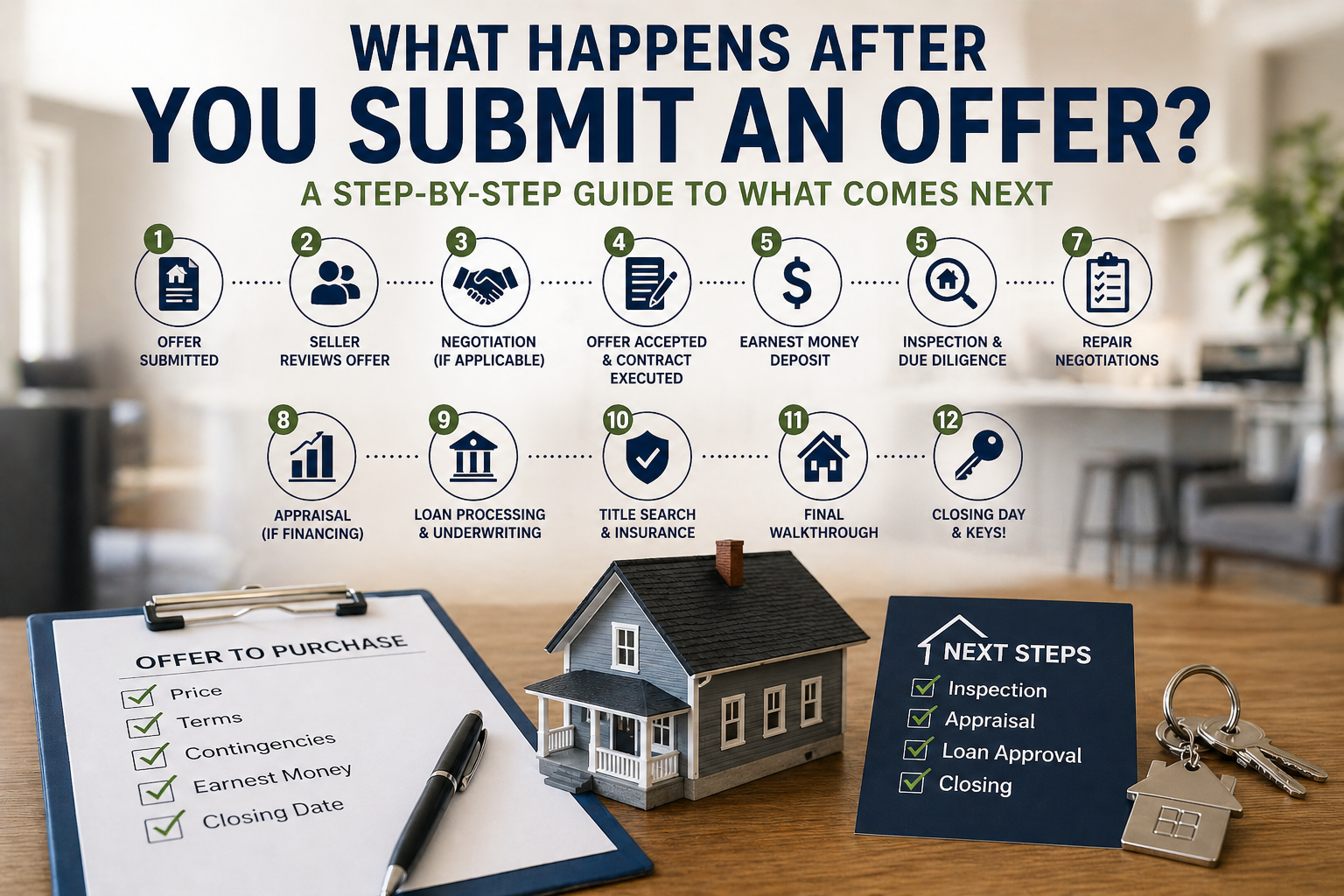
Step 1: The Seller Reviews Your Offer
Once your offer is submitted, the seller has a few options:
- Accept the offer as-is
- Reject the offer
- Counter the offer with changes
In competitive markets, sellers may receive multiple offers at the same time. This can lead to bidding situations or requests for “highest and best” offers.
The key factors sellers evaluate include:
- Offer price
- Financing type (cash vs loan)
- Contingencies
- Closing timeline
- Buyer flexibility
Step 2: Negotiation (If Applicable)
If the seller doesn’t accept your offer outright, negotiation begins. This may involve adjusting price, timelines, contingencies, or included items.
Common negotiation points:
- Purchase price
- Closing date
- Repairs or credits
- Included appliances or fixtures
This stage can move quickly or take several rounds, depending on how close both sides are.
Step 3: Offer Acceptance and Contract Execution
Once both parties agree, the offer becomes a legally binding contract.
At this point:
- All terms are finalized
- Deadlines begin
- You officially move into the “under contract” phase
This is where timelines become critical. Missing deadlines can impact your ability to renegotiate or even exit the deal.
Step 4: Earnest Money Deposit
Shortly after acceptance, you’ll submit your earnest money deposit.
This is a good-faith deposit that shows the seller you’re serious about the purchase. It is typically held in escrow and later applied toward your closing costs or down payment.
If you back out for a reason not covered by contingencies, you may risk losing this deposit.
Step 5: Option Period or Due Diligence Period
Many contracts include a short window for inspections and due diligence.
During this time, you can:
- Schedule a home inspection
- Review disclosures
- Assess the property condition in detail
This is your opportunity to fully evaluate the home before moving forward.
Step 6: Home Inspection
A licensed inspector evaluates the property’s condition, including:
- Roof and structure
- Electrical and plumbing systems
- HVAC systems
- Foundation and major components
The inspection report may highlight repairs, maintenance items, or potential concerns.
Step 7: Repair Negotiations
Based on the inspection, you may:
- Request repairs
- Ask for a credit toward closing costs
- Accept the property as-is
Sellers are not obligated to agree, so this becomes another negotiation point.
Step 8: Appraisal (If Financing)
If you’re using a loan, your lender will order an appraisal.
The appraiser determines the market value of the home to ensure it supports the loan amount.
Possible outcomes:
- Appraisal meets or exceeds purchase price
- Appraisal comes in below purchase price
If the appraisal is low, you may need to renegotiate, bring additional funds, or reconsider the purchase.
Step 9: Loan Processing and Underwriting
Your lender will begin finalizing your loan during this period.
This includes:
- Verifying income and assets
- Reviewing credit and financial documents
- Completing underwriting approval
You may be asked for additional documentation. Quick responses help keep the process on track.
Step 10: Title Search and Insurance
A title company will review the property’s ownership history to ensure there are no legal issues.
They will:
- Confirm clear ownership
- Check for liens or claims
- Prepare title insurance
Title insurance protects you and your lender from future ownership disputes.
Step 11: Final Walkthrough
Before closing, you’ll do a final walkthrough of the property.
This ensures:
- The home is in agreed-upon condition
- Repairs (if any) are completed
- No new issues have appeared
It’s your last chance to confirm everything before signing.
Step 12: Closing Day
Closing is when ownership officially transfers.
You’ll:
- Sign final documents
- Pay closing costs and remaining funds
- Receive keys to the property
Once everything is recorded, the home is officially yours.
Common Mistakes to Avoid After Submitting an Offer
- Making large purchases that affect your credit
- Changing jobs or income structure without consulting your lender
- Missing key deadlines in the contract
- Ignoring inspection findings
Stability and attention to detail are critical during this phase.
How Long Does the Process Take?
From accepted offer to closing, most transactions take between 30 and 45 days.
Timelines can vary based on:
- Financing type
- Inspection and negotiation complexity
- Market conditions
Final Thoughts
Submitting an offer is just one step in the home buying journey. What happens next is a structured process designed to protect both the buyer and the seller.
Understanding each stage helps you stay prepared, make informed decisions, and move through the transaction with confidence.
If you’re planning to buy and want guidance through each step, having a clear strategy and experienced support can make a significant difference from offer to closing.
Check out this article next